
Affordability is becoming one of the defining economic issues of the 2026 U.S. midterm election season as Americans confront high housing costs, elevated borrowing rates and persistent pressure on everyday expenses.
A Reuters/Ipsos poll conducted Aug. 28-31 found that 47% of registered voters identified the cost of living as the single most important factor in deciding their midterm vote. A separate Marquette Law School national survey conducted Sept. 2-9 found inflation and the cost of living ranked well ahead of other listed issues.
The political attention reflects a broader economic disconnect.
The U.S. economy continues to expand, but many households are facing borrowing and housing costs that remain far above the levels common before the pandemic. The Federal Reserve raised its benchmark interest rate by a quarter percentage point in September to 3.9%, while the average 30-year fixed mortgage rate climbed to 6.95%.
As a result, the word “affordability” is increasingly becoming shorthand for several different economic pressures at once.
What does “affordability” mean in the 2026 election?
In political debate, affordability is often presented as a single issue.
For households, it is not.
It can mean the price of groceries or gasoline, the cost of rent, the monthly payment on a mortgage, health insurance premiums, child care, auto loans or the interest charged on credit-card balances.
That distinction matters because different parts of the affordability problem are driven by different economic forces.
Some prices are affected directly by inflation. Others are shaped by interest rates, housing shortages, energy markets, labor costs or local regulations.
Pew Research Center found in July that economic issues were by far the subject registered voters most wanted congressional candidates to discuss. Cost of living and affordability alone accounted for 15% of open-ended responses, ahead of any other specific economic topic.
The result is that “affordability” has become a politically useful umbrella term, but resolving it requires multiple policy approaches rather than a single economic lever.
Housing is where the affordability gap is most visible
Housing may be the clearest example of the problem.
The average U.S. 30-year fixed mortgage rate rose to 6.95% in the week ending Sept. 17, the fourth consecutive weekly increase and the highest level in more than 19 months. A year earlier, the average rate stood at 6.26%.
Higher rates significantly change the economics of homeownership.
A buyer financing the same home at close to 7% pays substantially more each month than a buyer borrowing at the unusually low rates available earlier in the decade.
That higher financing cost comes on top of home prices that remain elevated in many markets.
Data from the Federal Reserve Bank of Atlanta’s Home Ownership Affordability Monitor indicate that by July 2026, a household needed roughly $127,000 in annual income to afford a median-priced home of about $409,000 under its affordability assumptions.
Median household income was estimated at roughly $86,500, leaving a gap of about 46%, the widest recorded in the series dating to 2005.
The National Association of Home Builders has reported a similar strain.
In the second quarter of 2026, a household earning the national median income needed about 34% of its income to cover the mortgage payment on a median-priced new home and 36% for a median-priced existing home.
For lower-income families, the required share was much higher.
Housing affordability therefore reflects both price and financing conditions.
Even if home prices stop rising rapidly, high mortgage rates can keep monthly payments elevated.
Higher rates are spreading beyond housing
The Federal Reserve’s September rate increase adds another layer to the affordability debate.
The central bank raised its benchmark rate to 3.9%, its first increase since 2023, citing persistent inflation and continued economic strength. Fed officials also indicated that another increase could be possible before year-end.
The federal funds rate does not directly set mortgage rates.
But Fed policy influences broader financial conditions, while mortgage rates are closely connected to longer-term Treasury yields.
Those yields have also been under upward pressure.
Recent factors include persistent inflation, heavy government borrowing, strong corporate demand for capital — including investment in artificial intelligence infrastructure — and higher energy costs.
For households, the distinction between short-term and long-term rates matters less than the outcome.
Borrowing has become more expensive.
Higher rates can affect mortgages, auto loans, business financing and revolving consumer credit. That means affordability can deteriorate even when headline inflation slows, because the financing cost attached to a purchase remains high.
This is one reason household perceptions of the economy can differ from conventional indicators such as GDP growth or employment.
Gasoline is again part of the cost-of-living debate
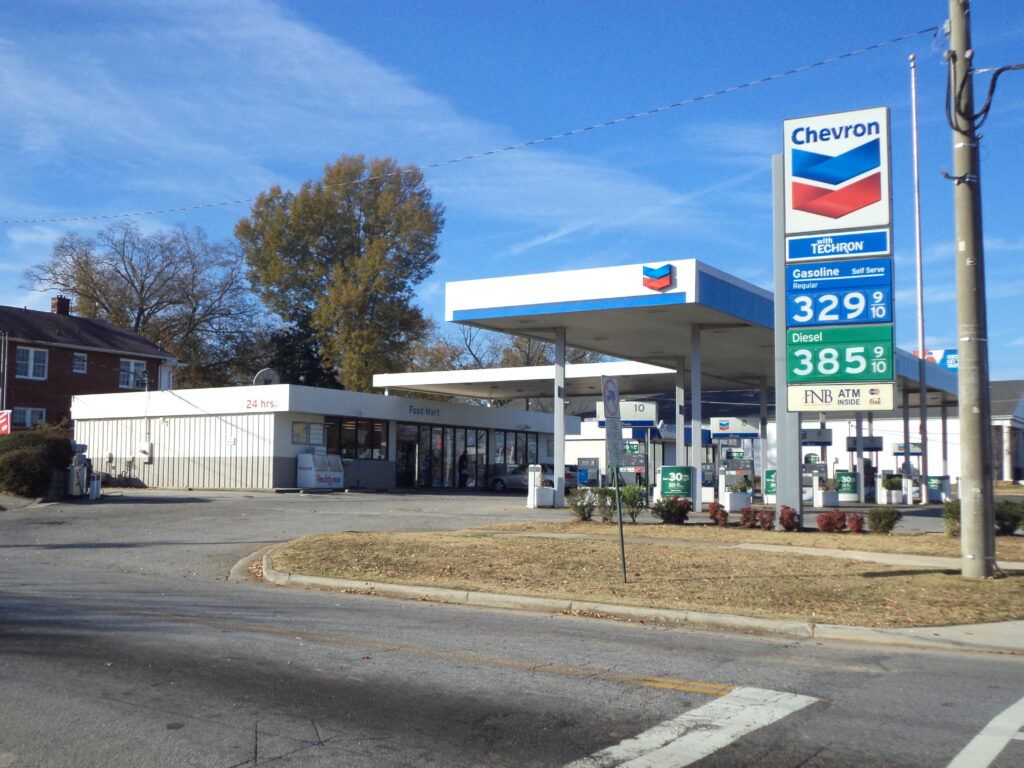
Energy prices have also returned to the political conversation.
A recent Marquette survey found that 80% of adults said gasoline prices had risen over the previous six months.
Higher fuel prices affect households directly at the pump, but they can also feed into transportation and distribution costs.
That can place additional pressure on goods that move through trucking, aviation and other energy-intensive supply chains.
The political debate around gasoline has been particularly intense because the increase has coincided with the U.S. conflict involving Iran.
President Donald Trump has defended the administration’s policy toward Iran despite higher fuel prices, while critics have focused on the effect of energy costs on household budgets.
For an economic analysis, however, the relevant issue is broader than assigning political responsibility.
When energy costs rise while interest rates are already high, households face simultaneous pressure from both consumption expenses and borrowing costs.
That combination can make affordability concerns more persistent even when other areas of the economy remain relatively strong.
A strong economy can still feel expensive
One of the central features of the current debate is the coexistence of economic growth and household dissatisfaction with prices.
The U.S. economy has continued to expand, supported in part by consumer spending and significant capital investment, particularly in technology and artificial intelligence infrastructure.
But aggregate economic growth does not affect all households equally.
Higher-income households tend to own more financial assets and are generally better positioned to absorb higher borrowing and living costs.
Renters, first-time homebuyers and households with limited savings can experience the same economy very differently.
This helps explain why affordability can remain politically salient even when conventional economic indicators appear relatively healthy.
The issue is not simply whether incomes are rising.
It is whether incomes are keeping pace with the combined cost of housing, energy, food, insurance, health care and financing.
The politics of affordability crosses party lines
Both major U.S. parties are emphasizing affordability, although they differ over its causes and preferred remedies.
Republicans have frequently argued that inflation and high living costs reflect excessive government spending, regulation and earlier economic policies under the Biden administration.
Democrats have focused more heavily on housing supply, health care, corporate pricing practices and targeted household assistance.
President Trump has also called for lower interest rates, while the Federal Reserve has emphasized its mandate to control inflation independently of elected officials.
The competing arguments illustrate why affordability is difficult to reduce to a single partisan policy dispute.
Lower interest rates could make borrowing cheaper, for example, but cutting rates while inflation remains elevated could risk renewed price pressure.
Increasing housing supply could improve affordability over time, but construction requires land, financing, labor and local approvals and therefore cannot immediately change the national market.
Energy prices can sometimes be influenced by domestic policy, but they are also shaped by global commodity markets and geopolitical events.
The trade-offs mean voters are likely to hear many different policy proposals under the same broad affordability label.
Housing supply remains a structural problem
Interest rates are only part of the housing problem.
The United States has also faced a chronic shortage of homes in many metropolitan areas.
That shortage became especially visible after the pandemic, when demand shifted across regions and construction struggled to keep pace.
High mortgage rates now create another constraint.
Existing homeowners who previously secured mortgages at significantly lower rates may be reluctant to sell and replace them with loans near 7%.
That so-called lock-in effect can reduce the number of existing homes reaching the market.
Meanwhile, developers face their own financing and construction costs.
The result can be a market in which demand weakens but prices remain comparatively resistant to falling because supply is also constrained.
Existing-home sales have consequently remained near multi-decade lows even as affordability has deteriorated.
For policymakers, this creates an uncomfortable equation.
Reducing housing costs ultimately requires more supply in many markets, but high rates make financing that additional supply more difficult.
Affordability matters for businesses too
The affordability debate also has implications beyond household finances.
Companies ultimately depend on consumer purchasing power.
When larger shares of household income go toward rent, mortgages, fuel, insurance and interest payments, less discretionary income may be available for restaurants, entertainment, travel and other consumer spending.
Employers can also feel the effect through wages.
Workers facing rising housing and transportation costs may demand higher pay, particularly in expensive metropolitan areas.
Businesses recruiting employees in high-cost regions may therefore face higher labor expenses even if overall wage inflation moderates.
Real estate, retail, automotive, financial services and consumer technology companies are particularly exposed to changes in household affordability.
The political issue is therefore also a business issue.
Why the issue matters for Korean companies in the U.S.
For Korean businesses operating in the United States, affordability trends can affect both demand and operating strategy.
Automakers and financial affiliates need to watch auto-loan rates and monthly payment burdens.
Consumer-goods companies need to monitor household spending patterns as housing and energy absorb a larger share of income.
Korean construction, materials and real estate companies may see opportunities from the structural shortage of U.S. housing, but they also face elevated financing and labor costs.
Retailers and digital-service providers may need to pay greater attention to price sensitivity as consumers reassess discretionary subscriptions and purchases.
The broader implication is that strong headline U.S. economic growth does not automatically translate into equally strong consumer conditions.
Companies evaluating the U.S. market increasingly need to examine household cash flow, debt service and regional housing costs alongside employment and GDP data.
Affordability is likely to remain an economic policy test
Recent polling shows why candidates are talking so frequently about the issue.
The Reuters/Ipsos survey found 47% of registered voters naming cost of living as their most important consideration in the midterm vote, while the Marquette survey found inflation and cost of living ranked above the economy, health care, immigration and other listed concerns.
Those figures describe voter priorities at a particular point in time; they do not determine electoral outcomes.
Economic conditions can change, and different groups experience affordability differently.
But the underlying pressures are measurable.
Mortgage rates are near 7%. Housing affordability indicators remain strained. The Federal Reserve has returned to raising rates, while energy prices and other household expenses remain prominent concerns.
That combination explains why affordability has moved from an economic statistic to a broad political issue.
For U.S. households, the question is not simply whether inflation is rising or falling.
It is whether income can cover the combined cost of living, housing and borrowing.
And for policymakers in both parties, that makes affordability one of the most complex economic challenges of the 2026 election cycle.