
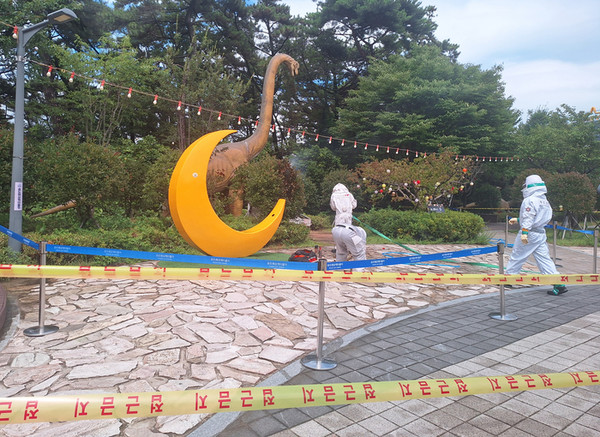
Fifteen tourists were stung when a swarm of wasps descended on the entrance to the Songdo Marine Cable Car terminal and adjacent Amnam Park in Busan, South Korea, on August 18. The mid-morning incident, which injured infants, children, and several foreign visitors, prompted a large emergency response and the removal of a sizeable nest near the site. Most victims sustained minor injuries. Authorities are investigating why the insects became suddenly aggressive.
Emergency calls reached South Korea’s 119 system at about 11:58 a.m., reporting multiple people being stung near the terminal building in Seo-gu, one of Busan’s districts, and along pathways that feed into coastal Amnam Park. Witnesses described wasps abruptly swarming in an area where visitors were waiting to board the cable cars that shuttle between Songdo Beach and the park, a popular waterfront route that draws heavy crowds in summer.
According to the Busan Fire & Disaster Headquarters, the injured included two infants, three children, and ten adults. Twelve people were transported to area hospitals, while one child and two adults were treated at the scene. Early tallies indicated many of the victims were foreign visitors, including five from Taiwan, five from China, and one from Thailand. Officials noted that initial nationality counts varied across follow-up reports because the scene was crowded and patients were dispersed to multiple medical facilities.
Roughly 40 responders and 12 vehicles were deployed to deliver first aid, cordon off access points, and manage crowd control. Fire officials asked the cable car operator to broadcast warnings to keep visitors away from the affected area while responders worked. A search of the plaza outside the terminal led to the discovery of a wasp nest about 40 centimeters in diameter in a tree within a flowerbed. The nest was removed by burning, and teams conducted additional pest control around the site. Officials said the insects observed at the scene were believed to be Asian hornets, though the precise cause of the sudden aggression remains unclear.
The Songdo Marine Cable Car is a signature attraction in Busan, a major port city on South Korea’s southeast coast. The line links Songdo Beach, one of Korea’s earliest public beaches, with the cliffs and trails of Amnam Park. The area’s mix of built infrastructure and coastal vegetation attracts large numbers of visitors, particularly during peak travel months.
Because the injuries stemmed from a natural hazard rather than a mechanical fault, the episode has renewed attention to how outdoor tourist venues account for environmental risks. Safety checks for cable cars and other equipment are standard, but experts and local officials alike have increasingly emphasized seasonal inspections of surrounding trees, flowerbeds, and public plazas where nests can form unnoticed. Quick coordination—first responders, site operators, and public alerts—limited further injuries in Busan. After removing the nest, authorities said they assessed the vicinity for additional risks and continue to review the circumstances of the swarm and the final tally of those affected.