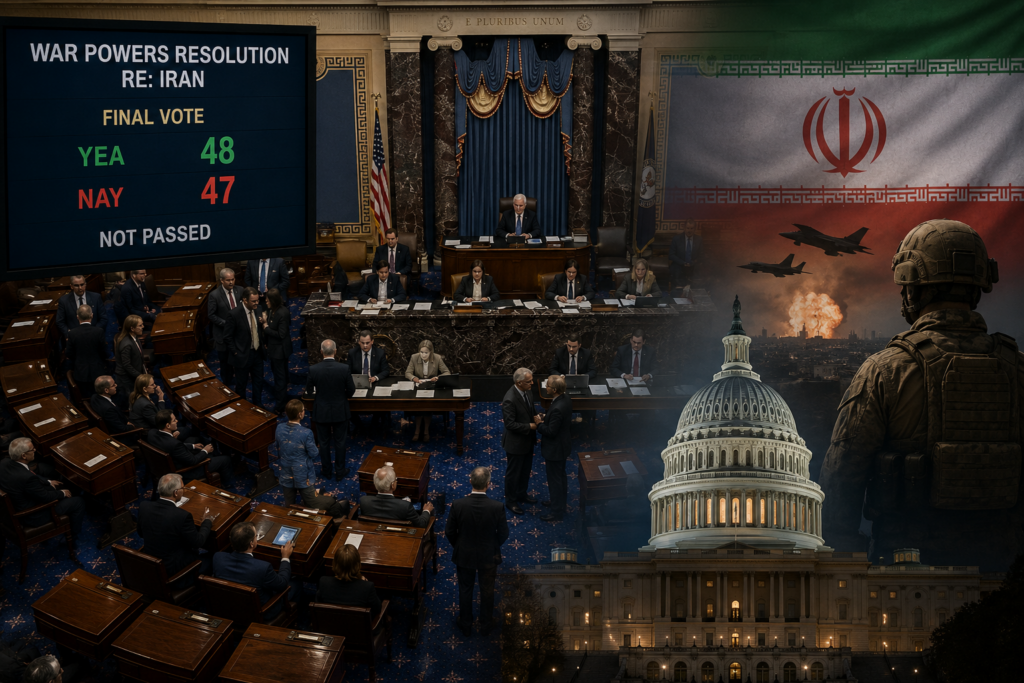
The U.S. Senate has once again rejected a measure aimed at increasing congressional oversight of military operations involving Iran, underscoring the ongoing debate over presidential authority during international conflicts.
Supporters of the proposal argued that Congress should play a more active role in authorizing extended military engagements, citing constitutional provisions that grant lawmakers significant responsibilities in matters of war and peace. They contend that major military actions should not proceed indefinitely without explicit legislative approval.
Despite attracting support from a small group of Republican senators, the measure failed to gain enough votes to advance. Most Republicans sided with the administration, emphasizing the need for flexibility in responding to rapidly evolving security threats and geopolitical crises.
The vote highlights a long-running tension within the American political system. While presidents have often exercised broad military authority during overseas operations, lawmakers from both parties have periodically sought to reassert congressional influence over decisions that could lead to prolonged conflicts.
Constitutional scholars note that disputes over war powers have resurfaced repeatedly throughout modern U.S. history, including during conflicts in Vietnam, Iraq, and Afghanistan. The latest confrontation demonstrates how questions surrounding executive power remain politically sensitive even during periods of heightened national security concerns.
With tensions in the Middle East continuing to shape U.S. foreign policy discussions, analysts expect the debate over war powers to remain a significant issue on Capitol Hill. Future legislative efforts could emerge as Congress continues to examine the balance between national security priorities and democratic oversight.