
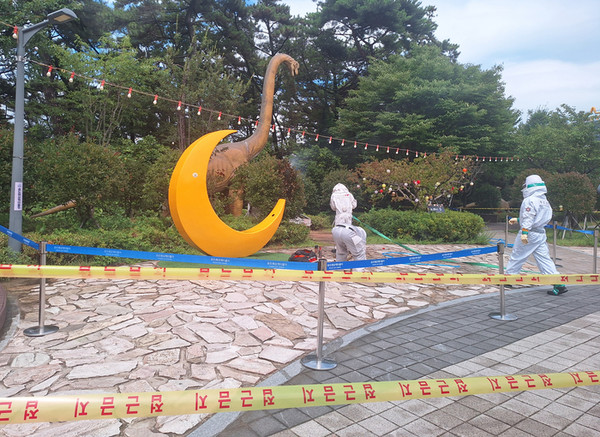
Fifteen tourists were stung when a swarm of wasps swept through the area around the Songdo Marine Cable Car in Busan, South Korea, on August 18, triggering a major emergency response and the removal of a large nest near the station. The injured included infants, children, and several foreign visitors, and most sustained minor wounds, according to local authorities.
The Busan Fire and Disaster Headquarters said emergency calls began at about 11:58 a.m. local time, reporting people being stung at the entrance to the cable car station building and on nearby paths within Amnam Park in the city’s Seo-gu district. The cable car links Songdo Beach to Amnam Park and draws heavy foot traffic in summer.
Roughly 40 firefighters and medics, supported by 12 emergency vehicles, were dispatched to the scene. Responders provided first aid, secured the area to prevent additional injuries, and requested that the cable car operator broadcast warnings to keep visitors away from the affected zone.
Officials reported that two infants, three children, and ten adults were stung. Twelve victims were transported to hospitals, while one child and two adults received on-site treatment. Many of those hurt were foreign tourists. Initial counts indicated 11 foreign nationals among the victims—five from Taiwan, five from China, and one from Thailand—though later tallies varied as patients were taken to different medical facilities amid post-incident congestion.
Firefighters later located a wasp nest about 40 centimeters in diameter in a tree within a flowerbed on the station plaza. Insects active at the scene were believed to be a large hornet species known locally as “deung-geom-eun malbeol.” Crews incinerated the nest and conducted follow-up pest-control operations to address remaining wasps in the vicinity.
Authorities said the cause of the sudden surge in wasp activity has not been determined. With many visitors passing through the area at midday, the stings occurred within a short time window, concentrating injuries before the perimeter could be fully secured. An investigation into the precise sequence of events and contributing factors is underway.
City officials have promoted the Songdo waterfront as a flagship attraction, with the restored marine cable car serving as a focal point for summer tourism. While the facility itself did not experience a mechanical failure, the episode underscored how natural hazards adjacent to popular infrastructure can pose acute risks in crowded settings.
Safety professionals noted that peak-season precautions may need to extend beyond equipment checks to include inspections of surrounding vegetation and landscaped areas where large nests can form. Rapid identification and removal of such nests are seen as critical to minimizing harm when visitor volumes are high.
Following the nest’s removal, responders surveyed the surroundings for additional threats and maintained restrictions until the immediate hazard passed. The fire department said it is continuing to verify the final victim count and review response timelines. South Korea’s national emergency number is 119, which fields fire, medical, and rescue calls; officials urged visitors to report stinging incidents immediately so responders can isolate affected areas and prevent further injuries.