
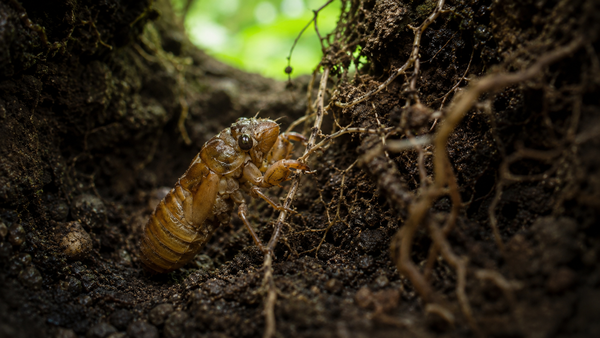
Seoul has moved to head off a renewed wave of cicada larvae harvesting at a popular urban nature site, installing warning banners at Yeouido Saetgang Ecological Park that prohibit collecting insects without a permit. The preemptive step comes during peak cicada emergence season and follows a spate of complaints last summer about people removing larvae in large quantities. City officials said no comparable reports have been filed so far this year but strengthened prevention is in place.
The banners, posted in recent days across the park, focus squarely on behavior: they ban unauthorized collection of cicada nymphs and other insects and do not single out any nationality or community. The approach reflects how the issue surfaced in 2025, when complaints alleged that some foreign individuals carried large containers and repeatedly gathered larvae at the site. Seoul’s messaging now emphasizes conservation rules and the orderly use of public spaces rather than cultural practices.
Concerns over mass collection have emerged beyond the capital. In 2025, observers at Samnak Ecological Park in Busan reported evening-hour harvesting, when cicada nymphs typically climb from the soil onto trees. While cicadas are not a legally protected species, the practice has raised questions about the impact of concentrated take during a brief, synchronized life-stage in dense urban habitats.
Under Seoul’s Han River Park ordinance—which governs conservation and public use along the river corridor that includes Yeouido Saetgang—removing flora or fauna without authorization is subject to administrative fines of up to 100,000 won, roughly $80. City officials note that Yeouido Saetgang functions as an urban habitat and an outdoor classroom, hosting nature observation and education programs for children. Repeated, large-volume harvesting runs counter to those goals.
Enforcement will rely on stepped-up patrols and on-site guidance requiring immediate cessation if unauthorized collection is found. If violations persist or circumstances warrant, the city says it will consider administrative penalties, including fines, under the ordinance.
The episode has reopened a familiar debate in metropolitan park management: how to allow public engagement with nature while safeguarding biodiversity in high-use spaces. Seoul’s current posture distinguishes casual observation or minimal, supervised collection from repeated bulk removal using containers, seeking to preserve both access and ecological integrity in one of the city’s most visible riverine reserves.